
MARTETIC technical guide
Screw piles in rocks, fill or buried concrete: what is possible
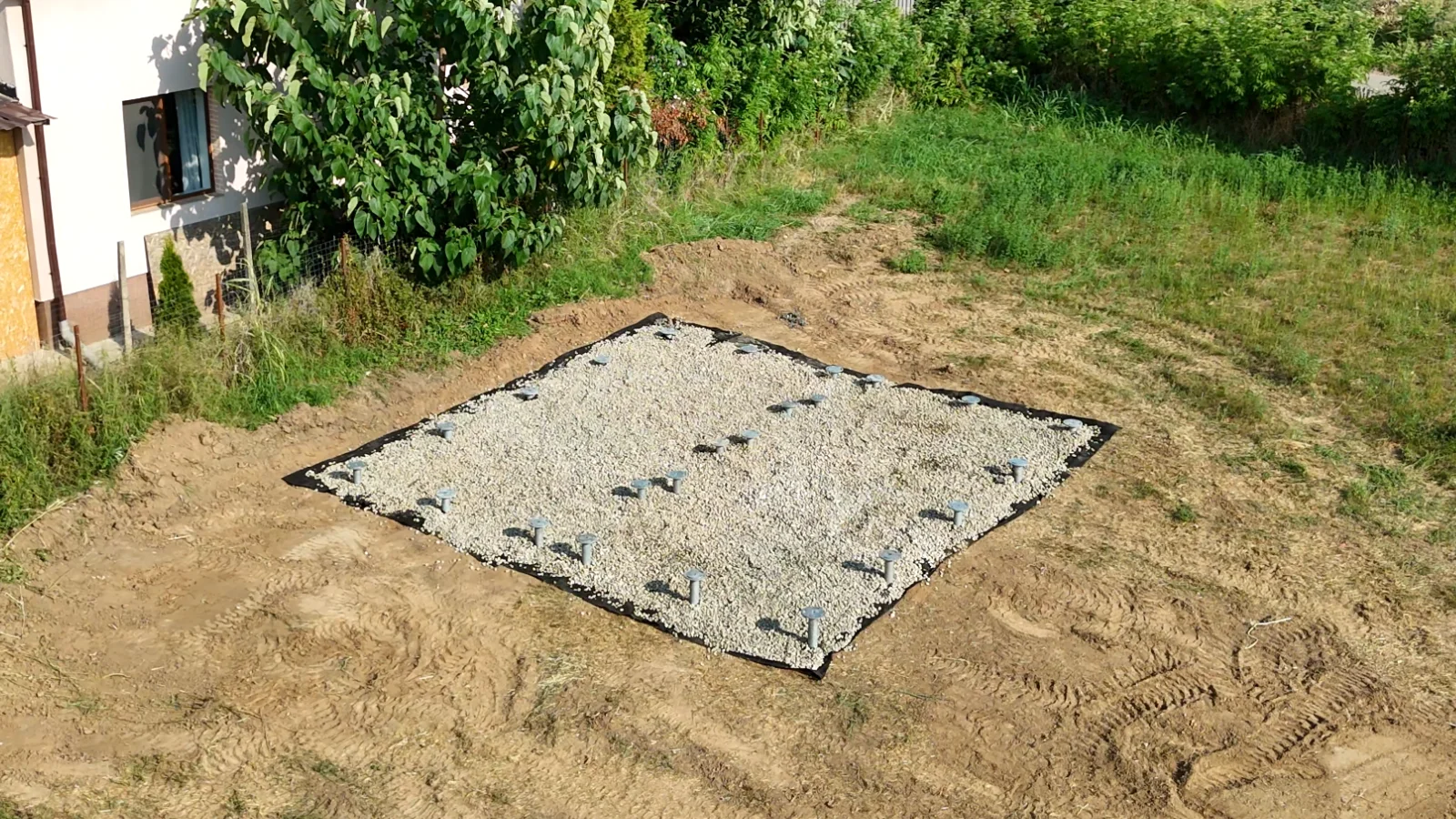
A clean surface does not show everything beneath it. Boulders, demolition debris or old foundations can change the installation even if the project looks simple at first sight.
Direct answer
Whether installation is possible depends on the nature, size and distribution of the obstacles. Gravel, an isolated boulder and a buried concrete slab are different situations. If a screw jams or deviates, the point must be assessed before continuing, and any change must be correlated with the design.
Gravel, boulders and fill: why the difference matters
| Situation | What must be clarified |
|---|---|
| Ground with gravel | The grading, the compaction, the thickness of the layer and the installability of the product. |
| Isolated boulders | The position, size and influence on the foundation point. |
| Controlled fill | The composition, the compaction records and the properties relevant to the project. |
| Uncontrolled fill | The thickness, the variation, the debris, the voids and the layers beneath. |
| Concrete or an old foundation | The geometry and the possibility of a designed intervention. |
| Rock at shallow depth | The compatibility of the solution and the need for another foundation method. |
The expression "hard ground" is not enough for choosing screws. It can describe suitable ground, but also an obstacle in which the chosen configuration cannot be installed.
What you can find out before the team arrives
Start with the history of the plot. Was there a house, a platform, a pool or a road? Was soil brought in from elsewhere? Are there photographs from the time of the old works?
Send the information together with the geotechnical study, the plans and photographs of the site. Mark on the sketch the known fill areas and the routes of buried works.
If there are concrete reasons for uncertainty, investigations or local checks may be more useful than bringing the whole team directly for installation. The method is set according to the nature of the missing information.
What a trial installation can confirm
A trial carried out at a justifiably chosen point can show whether the equipment and the product can be installed in the conditions found there. The position, depth, behaviour during installation and the relevant observations must be recorded.
The result does not automatically extend to the whole footprint. In fill containing demolition debris, two nearby points can meet different obstacles.
Separate the question "can it be screwed in?" from the question "what load can it take?". The load-bearing capacity is verified by the methods and, where provided for, the tests set for the project.
What happens if the screw stops
A sudden blockage is not automatically interpreted as reaching a load-bearing layer. A deviation, damage to the product or a situation that does not match the design may occur.
The operation is stopped at that point and the situation is clarified. The position and depth are noted, the information about utilities is checked and it is determined who approves the next intervention.
Forcing the equipment, improvising a change of angle or cutting the product to hide a wrong level does not solve the cause. An installation that looks finished can still be unacceptable.
What options can be analysed
Depending on the obstacle, a local intervention, controlled pre-drilling, changing the position with adaptation of the structure, or choosing another foundation solution can be analysed. None of them is a universal remedy.
Pre-drilling changes the conditions locally around the screw. The diameter, depth and method of execution must be set for the system and the ground concerned, together with the necessary checks. It is not enough for the product to fit in the hole made.
Moving a support can change the span of the beams and the load distribution. The repositioning is documented and approved by the person responsible for the structural solution.
When the obstacles are extensive, another solution may become more predictable. You can also consult the comparison between screw foundations and concrete.
Pipes and cables are checked separately
A cable detector does not confirm all buried materials, and the geotechnical study is not a complete utilities plan. For networks, the operators' information, the available plans and suitable locating methods must be used.
The HSE guidance on working near underground services stresses that plans show their position only indicatively and must be correlated with locating on the ground. It is a good-practice benchmark, without replacing local requirements. See the HSE explanations.
If an area remains unclear, screwing is not started at that position until it is clarified. The small size of the intervention does not exclude intersecting a pipe.
How unforeseen situations are handled in the offer
Ask for the assumptions about the ground to be specified, and what happens if obstacles are discovered. Set the procedure for stopping, recording and approving additional works.
A local intervention can mean machine time, new parts, a return visit to the site or a design change. These situations must not be confused with the standard installation that was quoted.
For a project far from the team's base, clarifying the access and the ground conditions before mobilisation can avoid a fruitless trip. The useful information is not a guarantee that there are no obstacles, but a realistic assessment of those already known.
Frequently asked questions
If there are stones on the surface, are screws excluded?
Not automatically. The nature and distribution of the material must be understood, then the compatibility with the product and the installation method verified.
Does a more powerful machine solve any blockage?
No. The product and the equipment have limits, and the obstacle may require a different intervention. Increasing the force can damage the screw or cause deviations.
Can I move a screw by a few centimetres?
The permitted deviation and any corrections depend on the project and the connection. The position is not changed freely without checking the effect on the structure.
Does a longer screw solve a fill with rubble?
Not necessarily. The length can help cross a weak layer only if the product can be installed and the configuration is verified. Solid obstacles can block the crossing.
Can screw piles be installed in rock, fill or buried concrete?
It depends on the situation. Isolated boulders, uncontrolled fill, old foundations or buried concrete must be assessed, and rock at shallow depth may require another foundation method. If a screw jams or deviates, the point must be assessed before continuing, and any change correlated with the design.
What should I tell the installer about the site?
The history of the plot, whether soil was brought in, photographs of earlier works, the known fill areas and the routes of buried works, together with the geotechnical study and plans.
Do you know there are stones, fill or old foundations?
Send the history of the site, the photographs and the available documents. Specify where the uncertain areas are, to determine the assessment needed before mobilisation.
The information explains how a project is prepared and is not an execution plan. The solution is determined for the real building and site, on the basis of the applicable documentation and the project's checks.