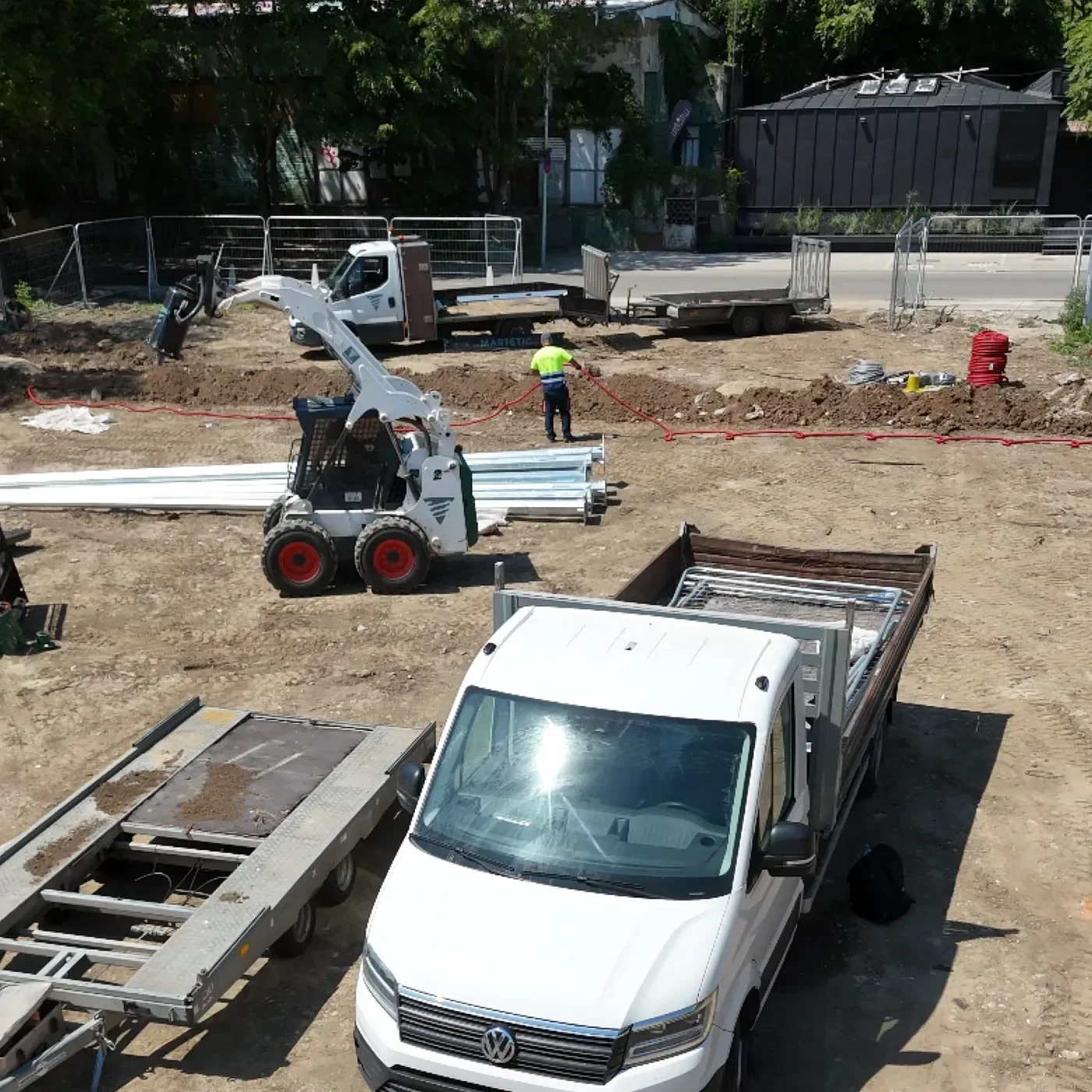
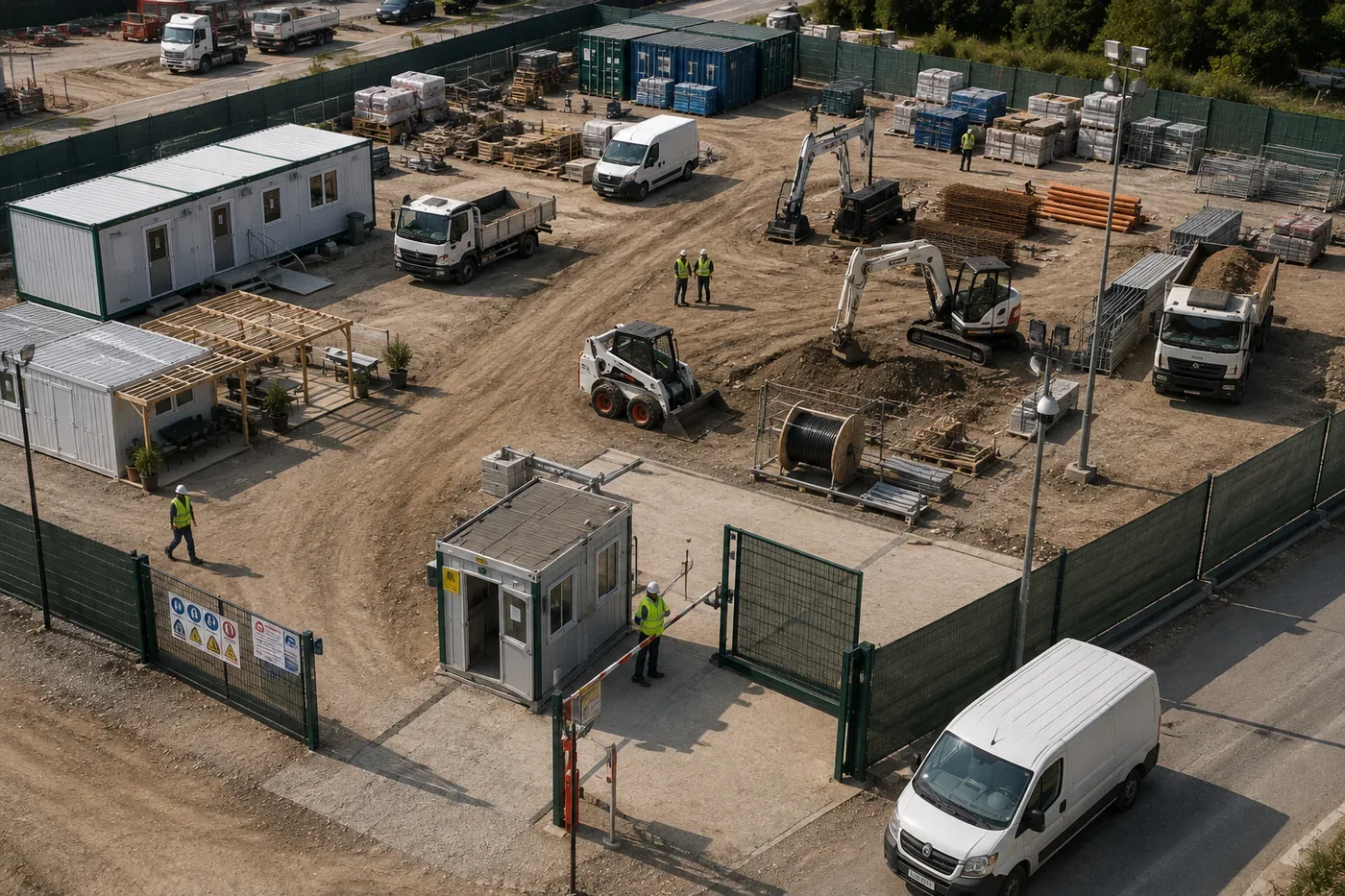
Ground-screw foundations and steel interfaces for site offices, welfare units, gatehouses, temporary lighting, CCTV, fencing, signage and selected technical platforms — designed around mobilisation, control and demobilisation.
The commercial opportunity is not to compete in the container market. It is to make temporary infrastructure easier to mobilise on infrastructure, energy, industrial and large construction projects.
Colliers reported construction volumes up by more than 6% in the first two months of 2026 after a record 2025, with contractor logistics already under pressure.
Large public infrastructure is one of the main construction engines, creating long-duration and geographically distributed site compounds.
CBRE estimates approximately 464,000 m² of industrial space under construction nationwide in 2026, another recurring source of temporary compounds and access infrastructure.
Select the numbered areas. The point is not to put every temporary item on the same screw; it is to coordinate the right ground interface for each repeated function.
After installation and the required checks, the next structural element does not wait for concrete curing.
Point foundations can reduce continuous excavation and associated spoil, although utilities, drainage, aggregate and access works may still be required.
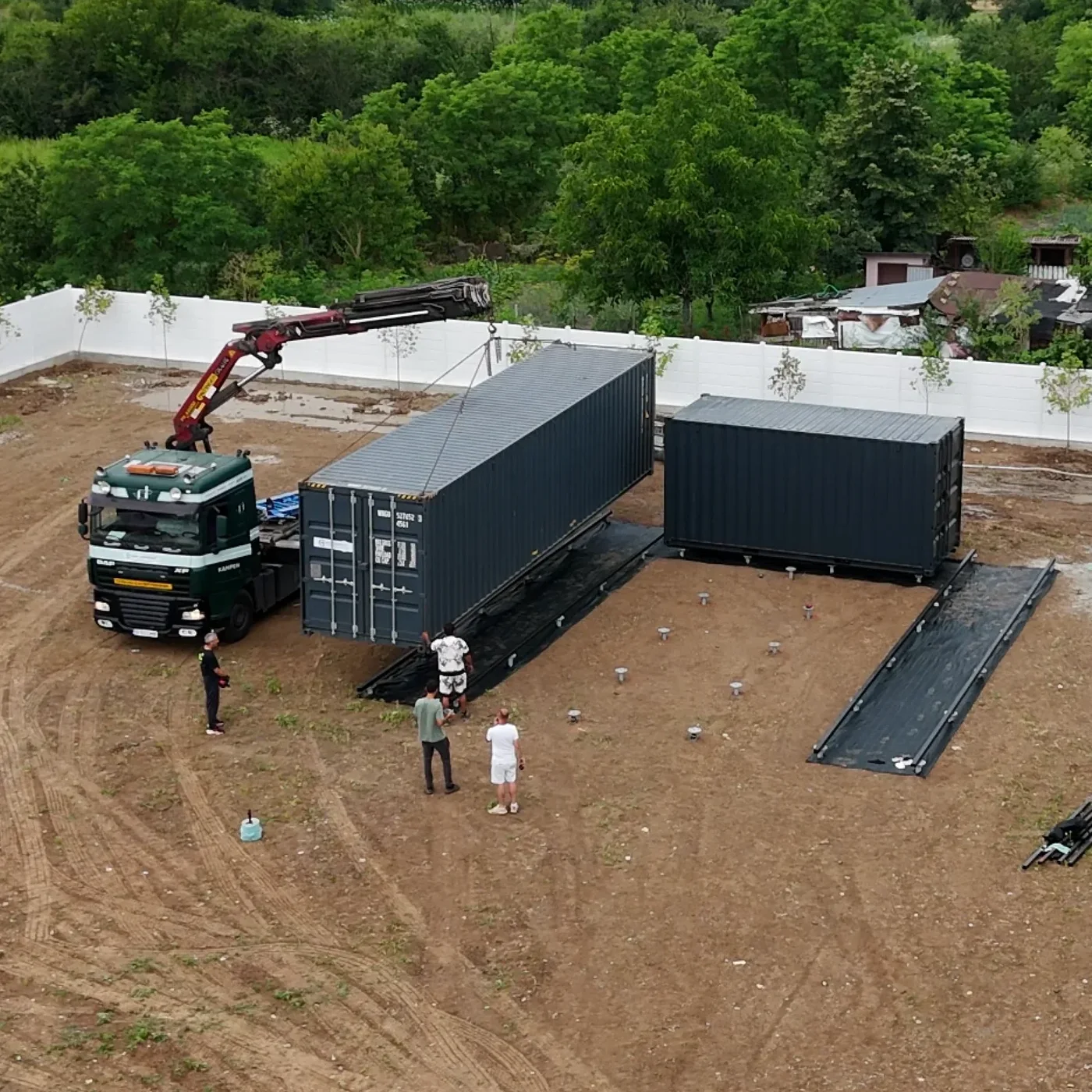
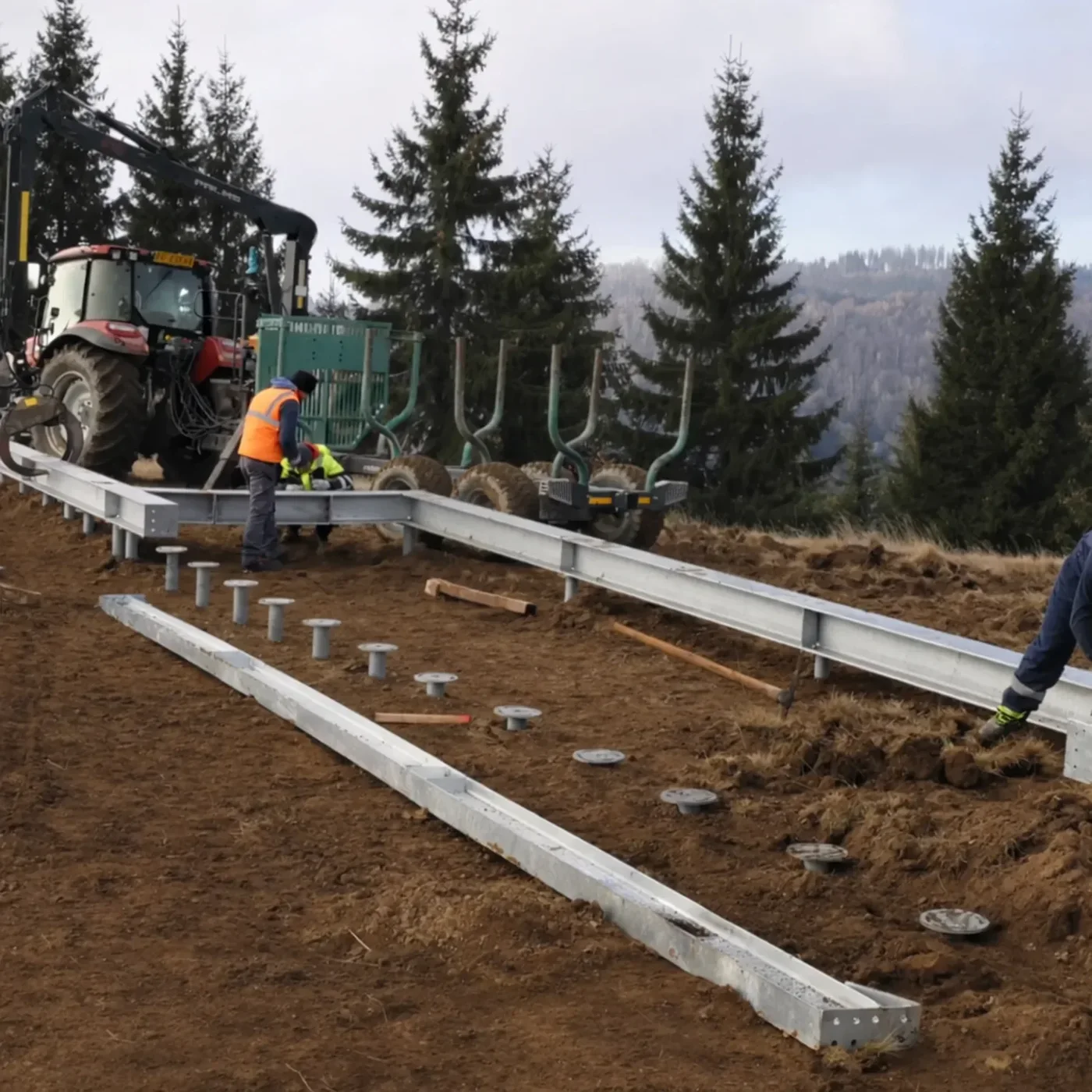
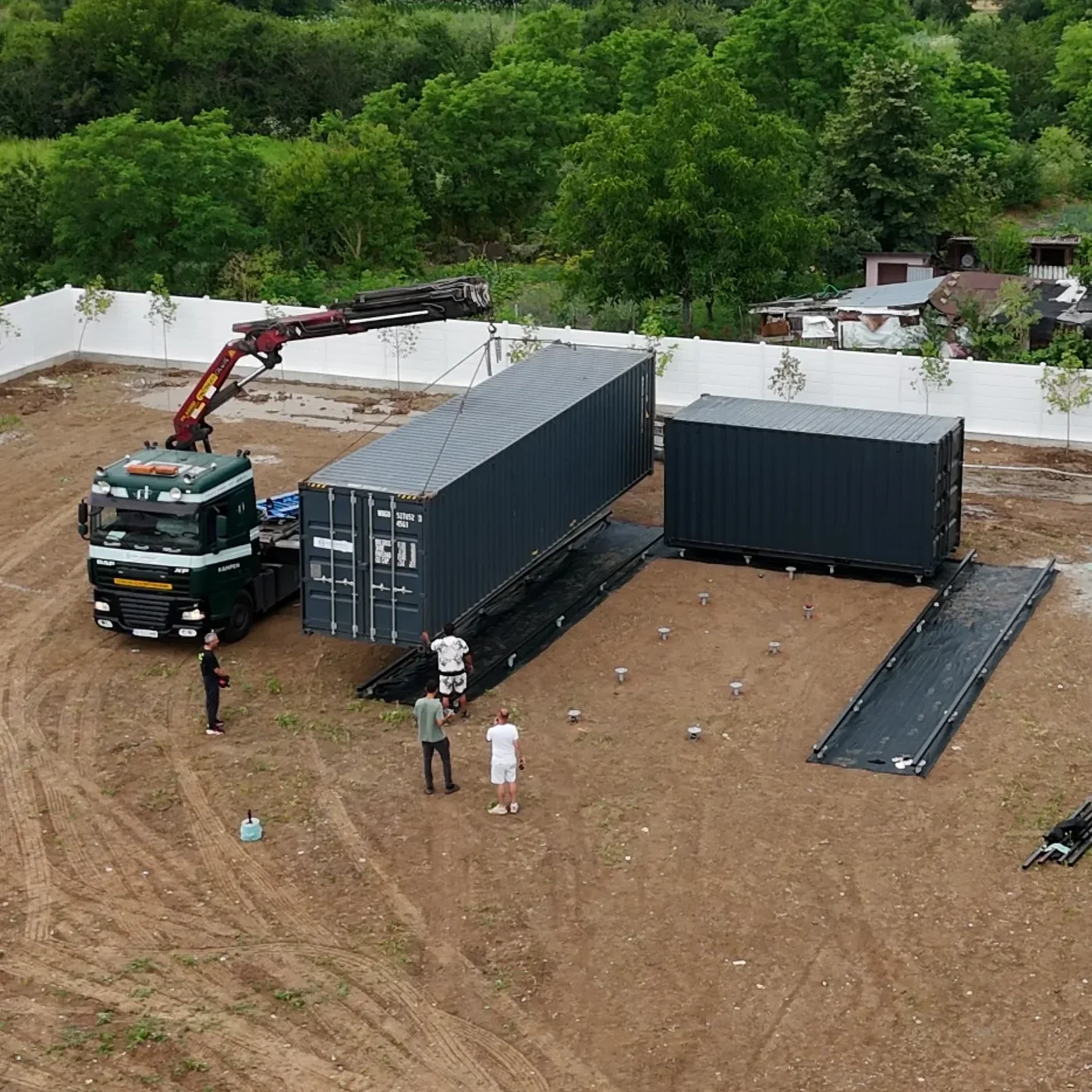
Container and frame supports can be set out and brought to compatible levels before the equipment or cabin arrives.
When removal is part of the brief, connections and access can be designed for extraction. Reuse requires inspection and a new project check.
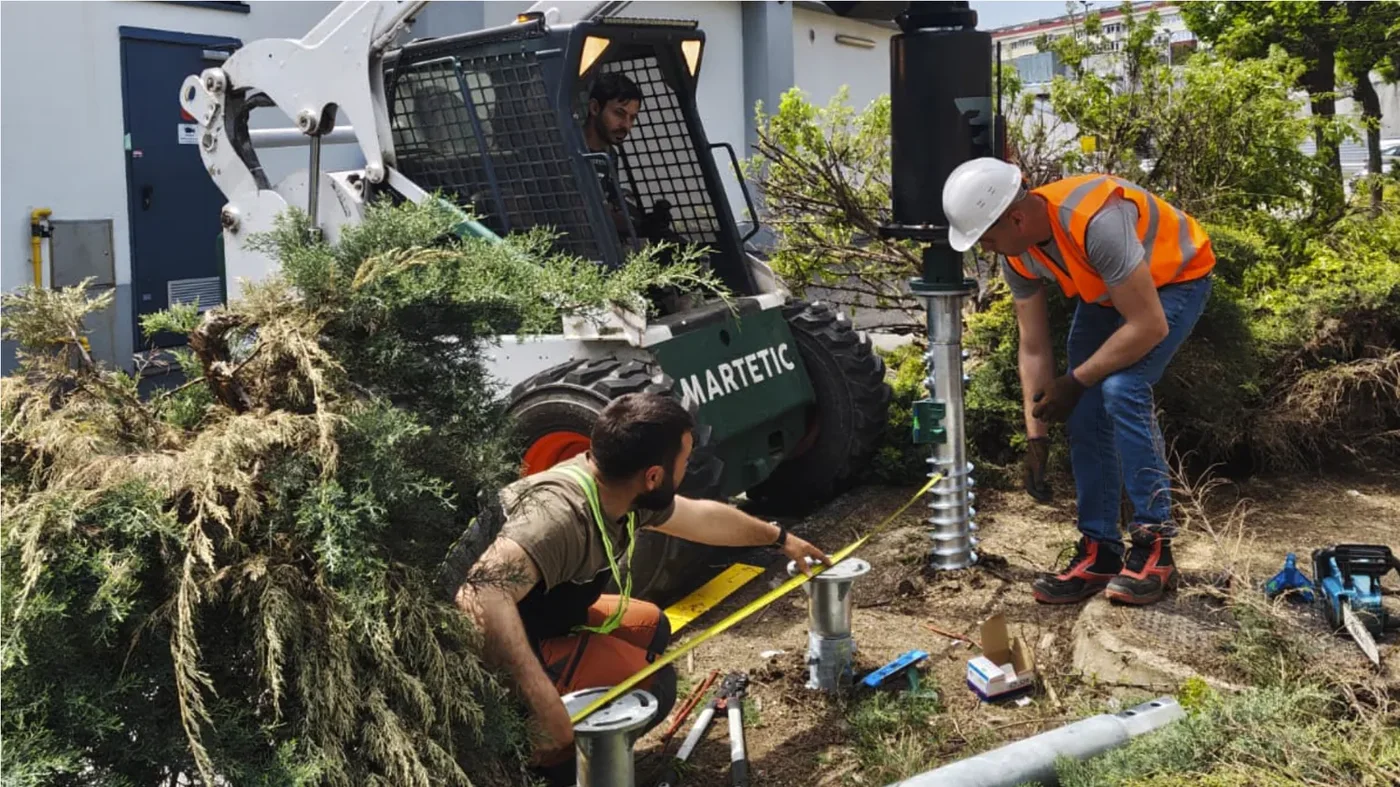
Natural starting family for appropriate fences, gates, light poles, signs and small vertical structures.
For containers, small platforms, steel frames and structures where a defined base-plate interface is useful.
Tip + extension(s) + top connection when a deeper target layer or site variability makes a modular configuration useful.
Flanges, holes, gussets, stiffeners and special heads for larger poles, steel frames, acoustic screens or project-specific equipment.
A MARTETIC reference project records approximately 100 points installed in one day for three modular houses.
MARTETIC documents a real project with foundations for 12-metre temporary lighting poles — relevant evidence for site-infrastructure work.
MARTETIC presents projects coordinated nationally, including limited-access, mountain, commercial and utility-constrained sites.
functions, quantities, movement, duration and future relocation
container rails, post geometry, gates, poles, equipment base plates
soil information, utilities, machine access, level and local preparation
G / M / V / custom, lengths, connections, steel rails / frames
mechanised installation, position, level, verticality and agreed checks
records at mobilisation; extraction / inspection at the end if contracted


For contractors and site-services partners with their own installation capability.
A controlled support package delivered on site.
For contractors who want the ground side coordinated before the container / security / technical supplier arrives.

Equipment and reducers are selected by product, torque, ground and access.
Support points are set out and checked rather than installed approximately.
Testing can be included when required; lateral behaviour is treated separately from axial testing.
Applicable product documents, lot identification, installation records and reports are defined by the contracted scope.
We can identify which temporary structures are good SITEBASE candidates, which need project-specific checks and which should remain on conventional foundations.
MARTETIC · NZEB GROUP SRL
+40 720 452 788
martetic.com
Useful first inputs:
• site organisation / temporary-works layout
• container / cabin support details
• pole heights / gates / screens / signs
• location, duration, access and underground services
• mobilisation and demobilisation dates